
How Sporting Organisations Use The Predictive Index®
Which sporting organisations use The Predictive Index®? From the NFL to the Premier League, here’s what we found and how they use it.
Reading Time: 11 minutes
Sporting organisations invest millions in performance analysis, scouting technology, and physical conditioning. And a growing number of them are also investing in something far less visible. Behavioural science.
Specifically, The Predictive Index® (PI).
The challenge has always been finding proof. Sporting organisations treat their people strategies the same way they treat their tactical playbooks. They hold them close. Understanding how your people are wired gives you an edge. How they think, how they respond to pressure, and how they need to be communicated with. In elite sport, you don’t share that kind of advantage.
That changed recently when Manchester United became the most high-profile sporting organisation to go public with their use of PI. It started with a case study featuring Daniel Ransom, Head of Psychology and Performance Lifestyle at the club’s academy. Then it went further. The Athletic and The New York Times ran a feature connecting a PI Behavioural Assessment™ taken by Michael Carrick in 2015 to one of the most talked-about coaching appointments in English football.
Since then, I’ve been digging into which sporting organisations use PI and, more importantly, how they use it. What follows is everything I’ve found, across the NFL, the NBA, college basketball, and the Premier League, along with insight into where the competitive advantage sits for any sporting organisation ready to take this seriously.
The Predictive Index® (PI) is a talent optimisation platform backed by over 70 years of behavioural science and more than 350 validity studies. Over 10,000 organisations across 142 countries use it to understand their people, make smarter hiring decisions, and build stronger teams.
Most people associate PI with the corporate world. Businesses use it every day to figure out who to hire, how to manage their teams, and why certain people thrive in certain roles. What is less well known is how deeply it has been adopted in elite sport.
The platform includes several assessments and software tools. In sporting organisations, two assessments come up more than any other.
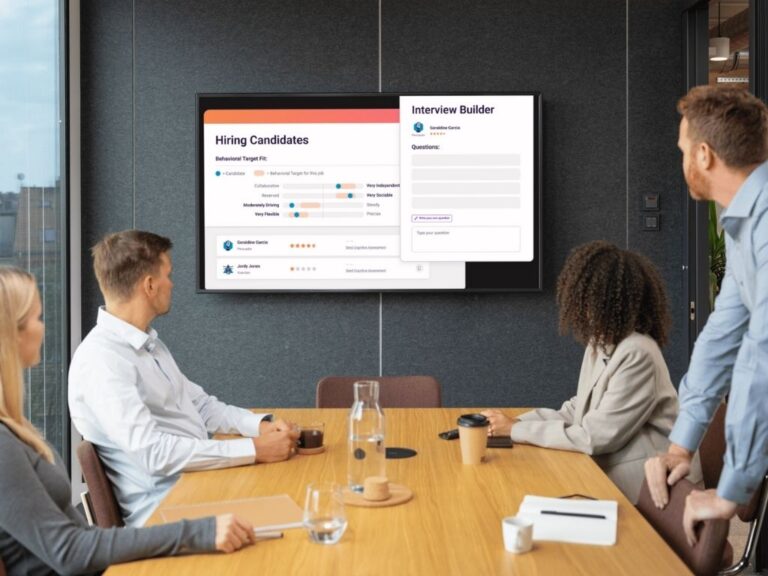
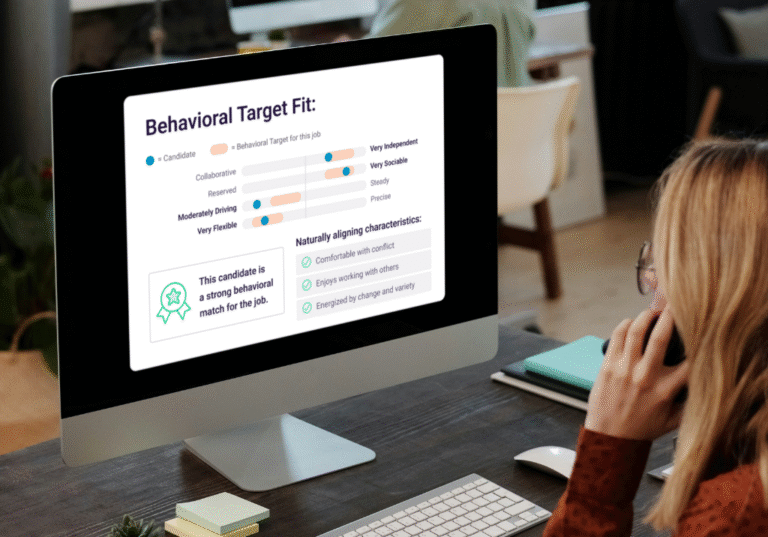
The Behavioural Assessment™ measures four core drives that shape how a person works and communicates: Dominance, Extraversion, Patience, and Formality. It takes around six minutes to complete and is available in multiple languages.
Think of it as a blueprint for how someone is wired. Not what they know or what they can do, but how they naturally approach the world. Whether they lead with intensity or steadiness. Whether they draw energy from people or from within. Whether they move quickly or take their time. Whether they follow a process or trust their instincts.
In a sporting environment, this kind of insight changes the way coaches communicate with players, the way new signings are integrated, and the way support staff work together behind the scenes.
The Cognitive Assessment™ measures how quickly a person takes in and makes sense of new information. It takes around 12 minutes to complete.
In sport, the ability to absorb a new tactical setup, respond to a half-time team talk, or adapt to a completely different style of play is often the difference between someone who performs and someone who gets left behind. The Cognitive Assessment™ gives coaches and performance staff a way to understand how quickly that learning happens for each individual, and to adjust their approach accordingly.
Discover how The Predictive Index, applied through the Recruitment Optimisation Framework, helps organisations cut costly mis-hires and build teams that stay.
For years, the answer to this question was “we know they do, we just can’t demonstrate it.” The Predictive Index® does not publish a sports client list, and the organisations using it have had no reason to go public. That has started to change.
Through a combination of PI’s own published content, independent journalism, and first-hand case studies, a clearer picture is now emerging. Here is what we know.
In the NFL, the Philadelphia Eagles and Kansas City Chiefs are both confirmed users of The Predictive Index®. PI named both franchises as clients and subscribers to the discipline of talent optimisation.
Their use is focused on the people behind the scenes. Scouts, analysts, front-office leadership, sales, marketing, and operations teams. PI’s own description is clear on this. The platform “may not see playing time on the field, but for those who use it behind the scenes, it’s a valuable asset.”
That distinction matters. These are two of the most successful franchises in recent NFL history, and both of them are using behavioural science to build and manage the teams around the team.
Two of the most notable examples of The Predictive Index® in sport come from the NCAA.
Legendary Tennessee coach Pat Summitt began using PI in the early 1990s to assess recruits and personalise her coaching style to individual players. Pat used it to understand what made each player tick, and to adjust how she motivated and communicated with them accordingly. The programme continued under her successor Holly Warlick, who said, “The longer we’ve used it, the more I’ve learned it’s a fairly accurate assessment.”
Jeff Bower took the same approach to Marist College, using PI to evaluate recruits, build his coaching staff, and accelerate his understanding of the players already on his roster.
And then there is Manchester United.
The club’s use of The Predictive Index® is the most publicly documented example in world sport. It spans player development, coaching, academy integration, onboarding, injury recovery, and cultural embedding across the organisation.
The story became front-page news when The Athletic and The New York Times connected a PI Behavioural Assessment™ taken by Michael Carrick in 2015 to his appointment as Manchester United head coach. The assessment described him as “a helpful, patient, stable person who works steadily and consistently.” Carrick himself called the results “scarily bang on.”
I have written a full case study on how Manchester United use The Predictive Index®, including insights from Daniel Ransom, Head of Psychology and Performance Lifestyle at the academy.
Every player is different. That sounds obvious, and every coach in the world would say they know it. The question is whether they have a reliable way to measure and act on it.
The Predictive Index® gives sporting organisations a framework for understanding how individual players are wired. Not their skill level, not their physical attributes, not their tactical awareness. Their behavioural drives. The things that shape how they respond to coaching, how they handle pressure, how they settle into a new environment, and how they interact with the people around them.
In college basketball, Jeff Bower used PI at Marist College to evaluate recruits before they arrived on campus. Understanding a player’s behavioural profile alongside their physical and technical ability gave his staff a more complete picture of what they were bringing into the programme. In one example, a recruit’s PI profile suggested he was competitive, gregarious, and comfortable with the ball in his hands at crunch time. That insight helped confirm a late scholarship offer that might otherwise not have been made.
The New Orleans Hornets took a similar approach under Bower’s leadership in the NBA, using PI to evaluate draft prospects and build a deeper understanding of the players already on the roster.
At Tennessee, Pat Summitt used PI from the early 1990s to understand what made each of her players tick. The programme continued under her successor Holly Warlick, who said, “The longer we’ve used it, the more I’ve learned it’s a fairly accurate assessment.”
In every case, the value sits in the same place. The Predictive Index® does not tell you who to sign. It tells you how to get the best out of the people you have.

The Predictive Index® serves coaches in two ways. It helps them understand the players they work with. And it helps them understand themselves.
Pat Summitt is one of the best examples of the first. She used PI profiles to personalise her coaching and communication style to each player on her Tennessee roster. One player might respond well to a direct, public challenge. Another might shut down completely under that same approach. PI gave her a way to know that before she walked into the room. It meant every interaction was deliberate, shaped by an understanding of how that individual was wired rather than a one-size-fits-all approach.
Jeff Bower took it further by using The Predictive Index® to assemble his coaching staff, both at the New Orleans Hornets and at Marist College. When you understand how each member of your coaching team is wired, you can build a group with complementary strengths rather than one where everyone thinks and communicates the same way.
The Michael Carrick story illustrates the second point. In 2015, while still a player at Manchester United, Carrick completed a PI Behavioural Assessment™. The results described him as “a helpful, patient, stable person who works steadily and consistently.” He called them “scarily bang on.” And it was reading through those findings that he began to seriously consider coaching as his next career.
That is the power of self-awareness for a coach. Knowing your own drives, your own tendencies, and your own natural way of operating allows you to lead with intention.
And when an entire coaching staff shares a common language for behaviour, conversations about players become more precise. Instead of “they have a bad attitude” or “they don’t seem interested,” the language shifts to something more useful. That kind of precision reduces friction, speeds up decision-making, and creates a coaching environment where people are understood rather than judged.

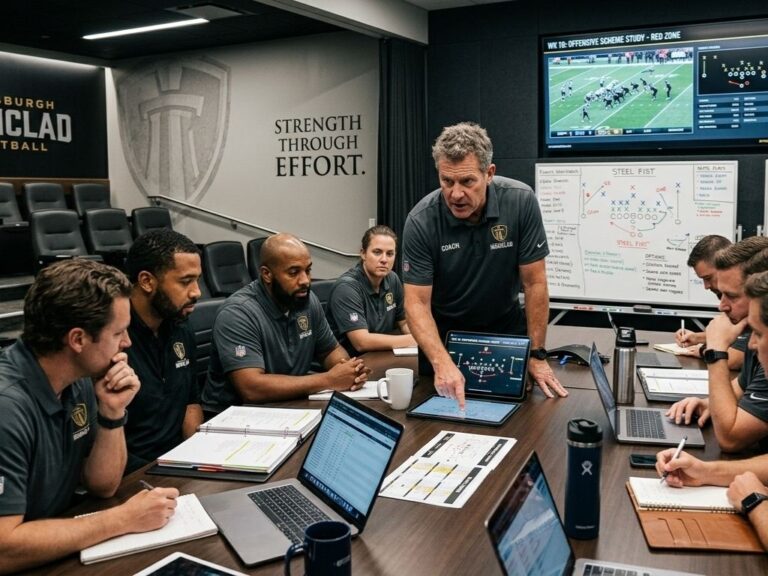
A Premier League football club employs hundreds of people. An NFL franchise, the same. Behind every player and every coach, there are analysts, scouts, medical teams, recruitment staff, operations leads, commercial teams, and senior leadership. These are the people who keep the organisation running. And in many cases, they are the first to be assessed with The Predictive Index®.
The Philadelphia Eagles and Kansas City Chiefs are the clearest examples of this. Both franchises use PI across their front-office operations. Scouts, analysts, leadership teams, sales, marketing, and operations staff. The platform, as PI describes it, “may not see playing time on the field, but for those who use it behind the scenes, it’s a valuable asset.”
It extends beyond the franchises themselves. ’47 Brand, the official licensed apparel partner of MLB, the NFL, the NBA, and the NHL, uses The Predictive Index® across its hiring and sales operations. Their national sales manager, Dan Larner, has said that hiring decisions that were previously made through gut feeling are now informed by The Behavioural Assessment™. When the businesses that surround sport are using behavioural science to build their teams, it tells you something about where the industry is heading.
This is not a minor detail. The people working behind the scenes directly influence what happens in front of the cameras. A scouting department that communicates well internally will make better recommendations. An operations team that understands how each member works under pressure will function more smoothly on matchday. A leadership group that knows where its own blind spots are will make more balanced decisions.
At Manchester United, department heads go through The Predictive Index® as part of their introduction to the club. Regular sessions keep the framework active across the organisation rather than letting it fade after an initial rollout. The aim is for PI to become part of how people talk about colleagues and working relationships every day, not something that sits in a drawer.
This is where sporting organisations often underestimate the value of The Predictive Index®. The conversation starts with players and coaches because that is where the attention naturally goes. The real operational gains often come from the people who never set foot on the pitch.
In business, some of the most successful sales organisations have used The Predictive Index® to benchmark the behavioural drives of their top performers. They assess the people who consistently deliver results, identify the patterns that show up across that group, and use those patterns as a reference point when hiring and developing the next generation.
Manchester United are doing the same thing. In sport.
Daniel Ransom, Head of Psychology and Performance Lifestyle at the club’s academy, has identified a recognisable behavioural pattern that tends to show up across elite performers. And it extends beyond football. The same combination of drives has been observed in pianists, competitive swimmers, and high performers in other disciplines too.
It is a specific combination of the four drives measured by The Behavioural Assessment™. When coaches and performance staff understand what that combination looks like, it becomes a genuine development tool. A way to understand what makes their best people tick, and a reference point for supporting the ones coming through behind them.
Everything covered so far focuses on the individual. Understanding how a single player, coach, or staff member is wired. That is where every organisation starts with The Predictive Index®, and it is where most of the public examples sit.
It is also just the beginning.
The real competitive advantage opens up when you move beyond individual profiles and start looking at how people within a team relate to each other. This is where The Predictive Index® becomes a genuine strategic advantage.
Think about what a sporting organisation is. It is a collection of small teams working towards the same goal. A defensive unit. A coaching staff. A scouting department. A medical and performance team. A matchday operations crew. In Formula 1, it is the pit crew. Every one of these groups is made up of individuals who are wired differently, and that wiring shapes how they communicate, how they handle pressure, and how they work together when it matters most.
The Predictive Index® includes a tool called Team Discovery that maps the collective behavioural composition of a group against its objectives. It plots each team member onto a four-quadrant framework and shows you where the team’s natural strengths sit, where the gaps are, and where friction is most likely to develop.
This is where things get interesting. When a coaching team can see that three of its four members are wired for pace and innovation while the fourth is naturally more process-driven, that is not a problem. It is information. It means the group can recognise why certain conversations feel like hard work, and they can adjust how they operate so that difference becomes a strength.
The same applies to a group of defenders who need to function as a single unit under pressure. Or a recruitment team that needs to make fast, aligned decisions during a transfer window. Or a support team behind a driver who needs to execute flawlessly in under two seconds.
This is the work I do with organisations every day. Self-awareness is the foundation. Team awareness is where the performance gains live. When the people inside a team understand each other’s drives, communication improves, friction drops, and decisions get sharper.
Most sporting organisations that adopt The Predictive Index® start with individual assessments. The ones that gain a lasting edge are the ones that take it further and start building awareness across the teams within their organisation.

The sporting organisations featured in this article operate at different levels, in different sports, and in different parts of the world. The way they use The Predictive Index® varies too. Some focus on front-office operations. Some use it directly with players and coaches. Some have embedded it across their entire organisation.
The thread that connects all of them is a simple belief. The better you understand your people, the better they perform.
That belief is not limited to elite sport. It applies to any sporting organisation that relies on people working together under pressure, making fast decisions, and adapting to change. From professional clubs and national governing bodies through to performance academies and sporting franchises.
If you are curious about what The Predictive Index® could look like inside your organisation, a good starting point is to experience it yourself. I have set up a link where you can complete The Behavioural Assessment™ and see your own profile. It takes six minutes, and it will give you a first-hand understanding of what the organisations in this article are working with every day.
And if you want to have a conversation about how it all fits together, I am always happy to talk.
I have spent the last 13 years supporting the growth of companies globally, helping them get the right people into the right seats at the right time.
Five years ago, I started my own business and brought the power of The Predictive Index into everything I do. I am a specialist in recruitment strategy and a certified PI consultant. I don’t just find people. I use science and data to solve the human risks that keep leaders awake at night.
Dave Crumby
Founder at 360 Talent Solutions | Certified Predictive Index Practitioner

Which sporting organisations use The Predictive Index®? From the NFL to the Premier League, here’s what we found and how they use it.

Learn how hiring with The Predictive Index changes interviews by defining the role first, using assessments earlier, and reducing risk before decisions are made.

A bad hire in a high-risk role is a cost you cannot afford. Discover how to use data to find a “safe pair of hands” and build a zero-error culture.

Discover the best alternatives to DiSC for recruitment with a clear, evidence led guide. Learn which assessment providers offer reliable, job linked insight to support fair and consistent hiring decisions.
| Cookie | Duration | Description |
|---|---|---|
| cookielawinfo-checbox-analytics | 11 months | This cookie is set by GDPR Cookie Consent plugin. The cookie is used to store the user consent for the cookies in the category "Analytics". |
| cookielawinfo-checbox-functional | 11 months | The cookie is set by GDPR cookie consent to record the user consent for the cookies in the category "Functional". |
| cookielawinfo-checbox-others | 11 months | This cookie is set by GDPR Cookie Consent plugin. The cookie is used to store the user consent for the cookies in the category "Other. |
| cookielawinfo-checkbox-necessary | 11 months | This cookie is set by GDPR Cookie Consent plugin. The cookies is used to store the user consent for the cookies in the category "Necessary". |
| cookielawinfo-checkbox-performance | 11 months | This cookie is set by GDPR Cookie Consent plugin. The cookie is used to store the user consent for the cookies in the category "Performance". |
| viewed_cookie_policy | 11 months | The cookie is set by the GDPR Cookie Consent plugin and is used to store whether or not user has consented to the use of cookies. It does not store any personal data. |