
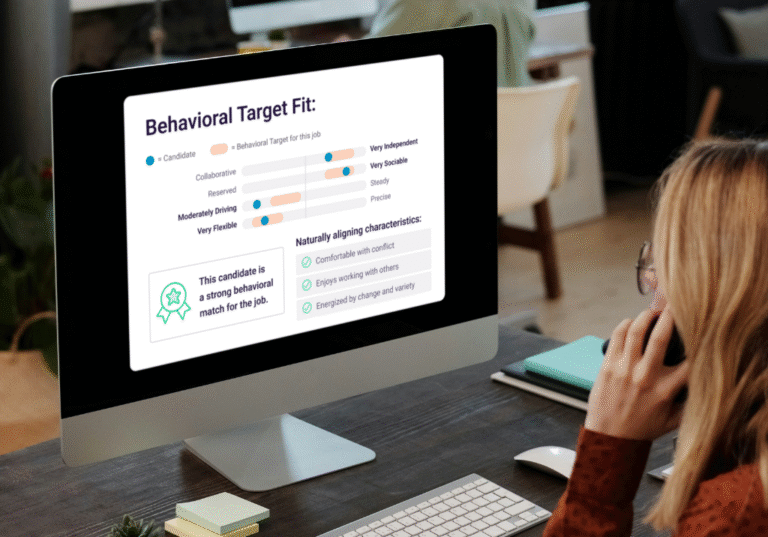

How to Interview With The Predictive Index
Learn how hiring with The Predictive Index changes interviews by defining the role first, using assessments earlier, and reducing risk before decisions are made.
Reading Time: 8 minutes
If you are involved in hiring, this will probably sound familiar.
A few years ago, bringing someone new into the business was exciting. You were building something, adding capability, moving forward. If a hire took a little longer to find their feet, teams usually had enough space to support them while they settled in.
That space has narrowed.
Most teams today are either running closer to capacity or are stretched. New hires are expected to contribute quickly, learn fast, and slot into the way things already work. When that happens, it feels great. When it does not, the effects show up quickly in workload, pace, and team morale.
This is why hiring conversations have shifted. People are paying much closer attention to risk. How long will it take this person to get up to speed? How will they handle the pace? What happens if the role stretches them more than expected?
What is interesting is how much responsibility sits with the interview itself. Most hiring managers step into interviewing after being promoted for doing their role well. Assessing others is rarely something they have been taught or coached on, yet it quickly becomes part of the job. They are expected to spot potential, understand fit, and make big decisions after a small number of conversations.
So interviews become intense by default. You are trying to read between the lines, pick up on signals, and work out whether someone will thrive once the day-to-day reality of the role kicks in. Afterwards, you replay the conversation in your head, thinking about the questions you asked and the ones you wish you had.
This is where hiring begins to feel harder than expected and is no longer an enjoyable experience. The interview ends up carrying too much responsibility on its own, with one conversation expected to reveal how someone will perform, adapt, and contribute once the role becomes real.
The good news is that this is not a people problem. It is a process problem. And once the process changes, the interview changes with it.
When we sit down with a company hiring, the first thing we look at is their hiring process and recruitment funnel.
CVs are reviewed, interviews begin, and fairly quickly, a sense of who feels strongest starts to form. Stakeholders compare notes, talk through impressions, and lean towards someone who seems safe or familiar. At that point, an assessment is often introduced to confirm a decision that has already been made.
That is how assessments end up at the end of the process. They are not there to guide decisions. They are there to support decisions that are already forming. The interview has done most of the heavy lifting by that stage, and the assessment becomes a reassurance step rather than a decision-making one.
I always wonder what happens if the assessment tells the opposite of what they hoped. How many of them would start again?
This is also why issues tend to surface months later. The interview focused on what could be seen and heard in the room, while the realities of the role only show themselves once the pressure is on and the work becomes routine.

When teams decide to take hiring seriously, the first thing that changes is not the interview. It is the order of the process around it.
This is where we use our Recruitment Optimisation Framework. It gives hiring teams a structure that prevents decisions being influenced too early by CVs, availability, or first impressions. The starting point is alignment on the role, because everything that follows depends on getting that right.
Before any candidates are interviewed, stakeholders use The Job Assessment by The Predictive Index (PI) to agree what the role is asking of someone.
Stakeholders complete a questionnaire that captures the behavioural and cognitive demands of the role. This includes how decisions are made, how quickly work moves, how much independence is expected, and where pressure is most likely to build when priorities compete.
That input produces a job target.
The job target becomes the reference point for the rest of the hiring process. It sits ahead of CV review, ahead of interviews, and ahead of any decisions about fit. It defines what good looks like for the role before attention turns to who might fill it.
This is the first and most important shift when hiring with The Predictive Index. The role is understood and agreed first. Everything else comes after.
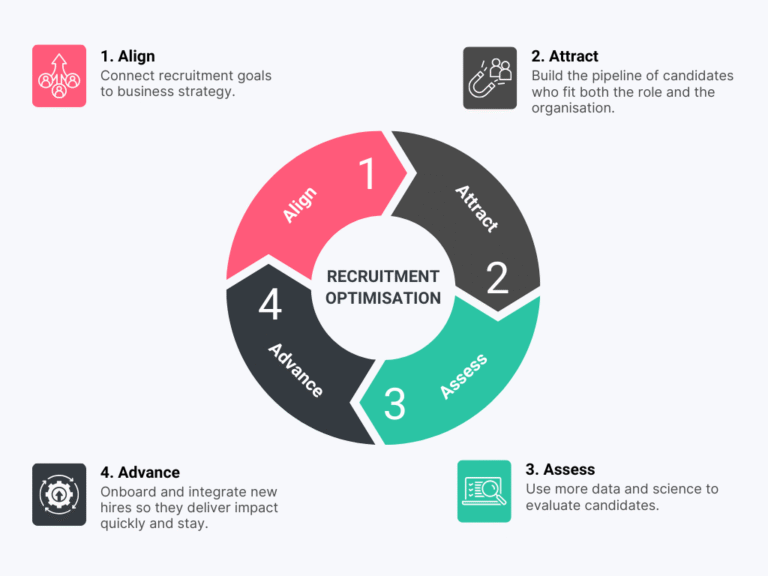
Discover how The Predictive Index, applied through the Recruitment Optimisation Framework, helps organisations cut costly mis-hires and build teams that stay.
Once the role has been properly defined, interviews stop feeling like a test you have to pass and start feeling like a conversation you can use.
You walk into the room already knowing what the job asks of someone and how that compares to the person you are interviewing. You already know where it will push someone. You know which parts of the job will feel natural and which parts will require effort, adjustment, or support. The interview becomes the place where you explore that openly.
This is also where you start to see how someone adapts. Some people talk comfortably about areas that stretch them and explain what they have learned along the way. Others describe similar situations but struggle to articulate how they adjusted or what support they needed.
You are listening for examples that connect directly to the role you have already defined.

When the role is already understood, interviews become very focused.
You do not try to cover everything. You take the areas where the role applies pressure and you spend time there. That is exactly how the interview guides from The Predictive Index are designed to be used.
For example, if the role moves at pace and decisions come thick and fast, and the data suggests the candidate prefers time to think, the interview goes straight to that stretch.
You might ask:
“Tell me about a role where things moved faster than you were comfortable with at first. What did you find hardest to adjust to?”
You then stay with it:
“What did you change over time, and what still took effort even once you had settled in?”
People who have lived that stretch answer very differently to people who have not. You hear specifics rather than general statements.
Most interviewers struggle to see past the polished answers a candidate provides. This tool identifies the behavioral stretch. Use it to generate specific questions that reveal how a candidate handles the demands of your role.
Does this job require absolute adherence to a process or does it require fast independent calls?
Does the candidate naturally seek guidance or do they prefer to work autonomously and take risks?
Enter your work email to see why you should ask this question and what the candidate response reveals about their fit.
Stop guessing. Start measuring.
Book a DemoIf the role requires autonomy and little day to day direction, and the data suggests the candidate prefers structure, the interview explores how they cope when that structure is missing.
A typical question sounds like:
“Talk me through a time when you were expected to work things out for yourself without much guidance. How did you decide what to focus on?”
A follow up often reveals more:
“What part of that situation did you find uncomfortable?”
If the role depends on influencing others, especially without authority, and the data suggests the candidate prefers independent work, the interview looks at how they operate in those moments.
You might ask:
“Can you give me an example of when you needed buy in from people who did not report into you. How did you approach it?”
Then:
“What did that take out of you?”
These conversations move past surface performance. Some candidates talk openly about the effort involved and the support they needed. Others struggle to move beyond polished answers.
That difference matters.
This is what changes when you interview with a clear understanding of the role. You are listening for evidence of adaptation, awareness, and how someone handles the parts of the job that do not come easily.
That is what stays useful long after the interview is over.
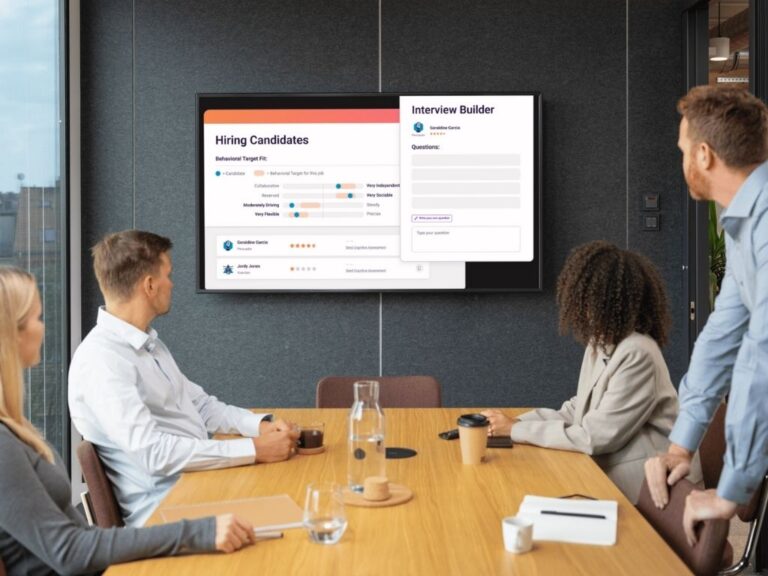
If a hire you were excited about has walked out after six months, it is usually worth looking beyond the interview itself.
Most people involved in the decision replay the conversations they had, the answers that landed well, and the moments that felt convincing at the time. Attention often stays on what happened in the room, even though the reasons people struggle or disengage tend to sit elsewhere.
A useful place to look is the order of the hiring process. Think about whether assessments are used at all and, if they are, when they appear. When they arrive late, they tend to reflect decisions that are already forming rather than shaping them. That leaves the interview carrying far more responsibility than it was ever designed to hold.
Shifting assessments earlier changes what hiring conversations are able to do. It brings the realities of the role into view before offers are made and before expectations harden on either side. The role becomes clearer. Stretch becomes visible. Support needs are easier to anticipate.
These changes rarely feel dramatic when they are introduced. They tend to show their value over time. New hires settle more predictably. Managers spend less energy correcting course. Teams feel steadier because fewer surprises appear once the work becomes routine.
I have spent the last 12 years supporting the growth of companies globally, helping them get the right people into the right seats at the right time.
Five years ago, I started my own business and brought the power of The Predictive Index into everything I do. I am a specialist in recruitment strategy and a certified PI consultant. I don’t just find people. I use science and data to solve the human risks that keep leaders awake at night.
Dave Crumby
Founder at 360 Talent Solutions | Certified Predictive Index Practitioner

Learn how hiring with The Predictive Index changes interviews by defining the role first, using assessments earlier, and reducing risk before decisions are made.

A bad hire in a high-risk role is a cost you cannot afford. Discover how to use data to find a “safe pair of hands” and build a zero-error culture.

Discover the best alternatives to DiSC for recruitment with a clear, evidence led guide. Learn which assessment providers offer reliable, job linked insight to support fair and consistent hiring decisions.

Discover how Swiss biotech companies can align hiring with business goals using data-driven people insights from The Predictive Index.
| Cookie | Duration | Description |
|---|---|---|
| cookielawinfo-checbox-analytics | 11 months | This cookie is set by GDPR Cookie Consent plugin. The cookie is used to store the user consent for the cookies in the category "Analytics". |
| cookielawinfo-checbox-functional | 11 months | The cookie is set by GDPR cookie consent to record the user consent for the cookies in the category "Functional". |
| cookielawinfo-checbox-others | 11 months | This cookie is set by GDPR Cookie Consent plugin. The cookie is used to store the user consent for the cookies in the category "Other. |
| cookielawinfo-checkbox-necessary | 11 months | This cookie is set by GDPR Cookie Consent plugin. The cookies is used to store the user consent for the cookies in the category "Necessary". |
| cookielawinfo-checkbox-performance | 11 months | This cookie is set by GDPR Cookie Consent plugin. The cookie is used to store the user consent for the cookies in the category "Performance". |
| viewed_cookie_policy | 11 months | The cookie is set by the GDPR Cookie Consent plugin and is used to store whether or not user has consented to the use of cookies. It does not store any personal data. |