360 Talent Solutions

Why Your High-Pressure Jobs Have a High Staff Turnover

Reading Time: 7 minutes

The rules of hiring have changed. Those of you planning to grow this year know the score.  The old habit of “growth at any cost” has been binned. Instead, we want absolute accuracy. We have entered what some call the Efficiency Economy. In this world, every pound, euro, or dollar you spend on a salary must work harder than ever before. This is especially true when you look at the investment you put into a new hire.

We now judge hiring decisions mostly on cost and risk. A poor hire carries a weight most teams simply cannot carry. Today’s lean teams are already stretched. They are expected to perform well above their usual limit. That is why growing this year is really about lowering your risk.

If you work in a niche where the rules are tough or the tasks are technically difficult, the stakes go even higher. In these markets, finding the right person is about more than a fancy degree or a shiny CV. It is about solving a threat to the business.

Let’s use the radiopharmaceutical industry as an example. This sector is moving fast, but it has a massive problem. The product literally disappears while you hold it. These medicines decay in hours. You have to make decisions quickly to ensure they reach the patient in time. A Qualified Person (QP) must sign off the batch so it can catch a flight immediately. If that person lacks the natural grit to stay precise while the clock is ticking, the medicine becomes useless. A four-hour delay does not just mean a late parcel. It means a cancer patient’s treatment is cancelled. Your business might not deal with nuclear isotopes, but the lesson is the same. If your hire cannot handle the specific risks of your market, your whole operation is wide open.

Table of Contents

How to hire someone you can depend on

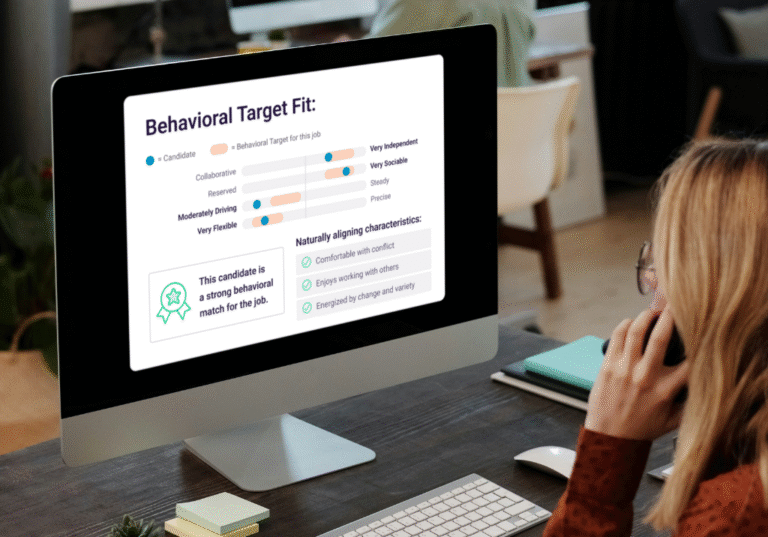
To find the right person for these types of roles, we have to move beyond the CV and interview. Most candidates can pretend to be detail-oriented for an hour. To find the real ones, we use behavioural science and the people data from The Predictive Index (PI). This gives us an objective look at how someone is actually wired.

We focus on four main drives. Think of these as the internal motors that push people to act in certain ways:

  • Dominance: The urge to have a say and take control.
  • Extraversion: The urge to talk and work with others.
  • Patience: The urge for stability and a steady pace.
  • Formality: The urge to follow rules and be precise.


When the stakes are high, you want someone who finds safety in the rules. This is where the Safety Style Inventory comes in. It is a specific tool within PI that helps us spot the different ways people handle risk. For roles that cannot have errors, we are looking for a “Formal” profile. These are our “Safety Anchors”. They usually have a great deal of Patience and even more Formality.

Discover how The Predictive Index, applied through the Recruitment Optimisation Framework, helps organisations cut costly mis-hires and build teams that stay.
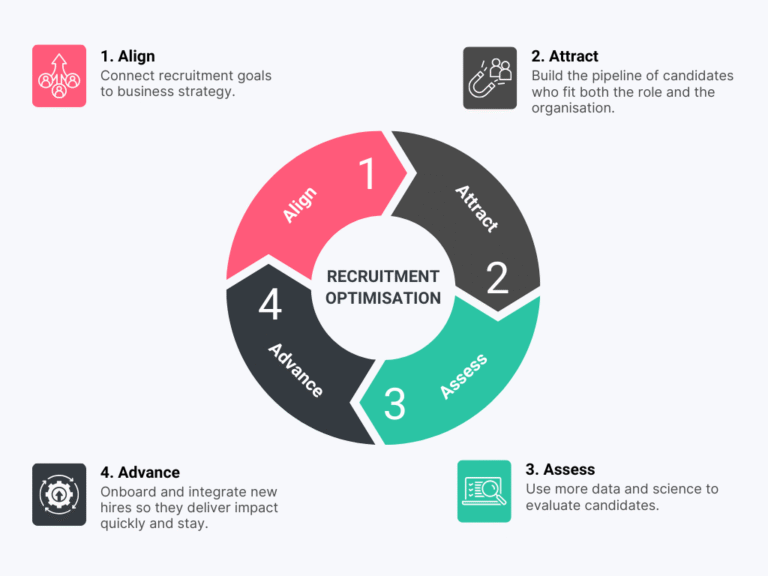

This fits into the “Assess” stage of our Recruitment Optimisation Framework. Instead of a “gut feel,” we measure with evidence. For example, we look for that specific combination where their drive for rules (Formality) is stronger than their drive to be liked (Extraversion). This gives them the grit to say “no” if a batch is not perfect, even if the team is in a rush.

Hiring a “Maverick” for a role like this is a disaster waiting to happen. Mavericks have a lot of Dominance but very little Formality. They love to innovate and try new things. In a sales team, that is gold. In a high-risk lab, it is a liability. They might try a “shortcut” to save time. In your world, that shortcut could lead to a cancelled treatment or a regulatory fine. By using this data, we find the people who are naturally wired to protect your business.

The "Unsupervised" Test

Adjust the sliders to match a candidate's natural drives.
Will they do the right thing when no one is looking?

Team Player Dominance (A) Independent
Analytical Extraversion (B) Persuasive
Driving/Urgent Patience (C) Steady/Patient
Flexible Formality (D) Precise
Reliability: Variable
The Generalist

Without extreme drives for rules or independence, this person is adaptable. However, in high-stakes environments, "adaptable" can sometimes mean "inconsistent."

How do you interview for this trait?

Unlock the interview questions that reveal if this profile is a safety asset or a liability.

Interview Strategy: Generalist

You cannot spot this integrity risk by looking at a CV. You must probe their natural wiring.

Q1: "Tell me about a rule you felt was inefficient."

Listen for: A desire to bypass the rule (Risk) vs. a desire to formally improve it (Asset).

Q2: "What is more important: The deadline or the process?"

For this profile, any hesitation is a red flag. The process protects the patient.

Stop guessing. Start measuring.

Book a Demo

How to hire for logic over emotion

For a high-risk role, being a good person is not enough. Once we know someone has the right behavioural profile to be a “Safety Anchor”, we have to look at how they make a choice when things get messy. This is where we look at Factor E. This part of the Behavioural Assessment from The Predictive Index tells us if a person is a Subjective or Objective thinker.

Subjective thinkers rely on their “gut”. They make decisions based on how they feel or the mood of the room. This works for creative tasks. It is a massive risk in a regulated environment.

Objective thinkers strip away the emotion. They use facts and logic. When a batch is ready at 3:00 AM and the pressure is on, you need someone who looks at the data and makes a choice based on reality.

Imagine a courier is waiting and the pressure is high. A subjective thinker might feel bad for the driver and try to “help out” by rushing a sign-off. An objective thinker does not care about the driver’s schedule. They only care about the data on the screen. If the numbers do not match the SOP, the shipment does not move. That is the kind of grit that protects your license.

The engine room: cognitive ability

Behaviour tells us how they will act. Cognitive Ability, or the “g” factor, tells us how much they can handle. Think of this as the processing power of their brain.

Regulations change fast. Whether it is new trade laws or complex technical updates, your team has to absorb a lot of difficult info quickly. In our Recruitment Optimisation Framework, the Cognitive Assessment by PI is a vital piece of the Assess stage. We are not just looking for “smart” people. We are looking for people with the mental capacity to solve a problem before it turns into a crisis.

A person with high cognitive agility can look at a logistics failure, process the new regulations, and find a solution while the clock is ticking down. They learn the job faster. They make fewer mistakes while they are doing it. When you pair the right behavioural wiring with high cognitive power, you aren’t just hiring a staff member. You are hiring an insurance policy for your business

Building a zero-error culture

When you bring all of this together, you stop hiring for “potential” and start hiring for “performance”. This is how you build a Zero-Error Culture. It is the final piece of our Recruitment Optimisation Framework, which we call the Advance stage.

In this stage, you do not just let a new hire sink or swim. You use their PI data to manage them in a way that works with their natural wiring. If you have hired a “Safety Anchor”, you know they need certain rules and a steady pace to stay at their best. You do not have to guess how to keep them happy or productive because the data has already told you.

A Zero-Error Culture means your team is not fighting against their own nature. They do not have to pretend to be meticulous or pretend to be calm. They just are. This reduces the friction that usually slows down a growing company. It also stops the burnout that happens when you force a “Maverick” to act like an “Anchor” for eight hours a day.

For you as the leader, the result is the same as having a reliable engine in your car. You do not have to spend every morning checking if it will start. You can focus on the road ahead. You can explore new niches and scale your business with the certainty that your risks are being managed by people built for the job.

You get to stop being a firefighter and go back to being a leader. That is the true value of precision talent acquisition in 2026.

Download our Latest Guide
How to Choose the Right Assessment for Hiring

How Can We Help

I have spent the last 12 years supporting the growth of companies globally, helping them get the right people into the right seats at the right time.

Five years ago, I started my own business and brought the power of The Predictive Index into everything I do. I am a specialist in recruitment strategy and a certified PI consultant. I don’t just find people. I use science and data to solve the human risks that keep leaders awake at night. 

Dave Crumby

Founder at 360 Talent Solutions | Certified Predictive Index Practitioner 

Subscribe to our Monthly Newsletter
The Recruitment Optimiser
Our Latest News & Insights